The Matching-Set Myth: Why Mixed Tableware Can Work
Mixed tableware can feel coherent without matching: learn how to balance color, pattern, shape, and occasion when choosing pieces for your table.
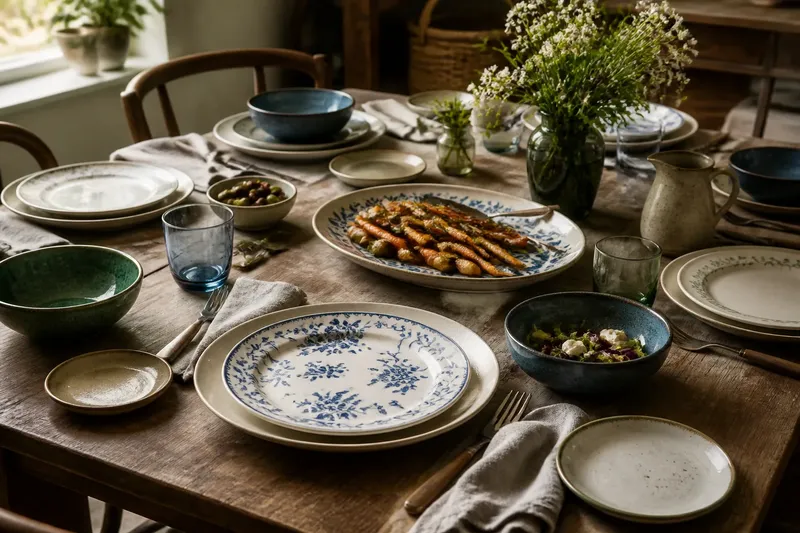
Mixed tableware can feel deliberate when its pieces share a visual thread, even if no two plates match. A blue rim, a repeated floral motif, or a similar matte finish can connect dishes from different sets and help a table feel composed rather than assembled by chance.
The useful question is not whether every place setting is identical. It is what kind of consistency the meal, the room, and the dishes already support. Choose a balancing approach that suits your situation, then let variation do the work matching once did.
Start with the occasion
For a formal meal with several courses, repeated shapes and a restrained palette can make service easier to follow. Matching dinner plates paired with varied dessert plates, for example, keep the main course visually settled while allowing a small, noticeable change at the end. If guests will pass serving dishes around, consistent plate sizes may matter more than consistent patterns.
For an informal dinner, a broader mix often feels at home. A combination of stoneware bowls, inherited china, and plain side plates can make a table feel personal, particularly when the colors sit comfortably together. Leave enough empty space between strong patterns so each piece remains readable.
For a buffet or shared meal, prioritize practical grouping. Keep serving bowls stable and easy to identify, and gather similar-sized plates where guests can reach them. Here, a repeated color or material can provide order without requiring a complete set.
Choose a visual anchor
A visual anchor is the feature that gives different objects a common point of reference. It might be a color, a shape, a surface, or a repeated detail. Think of it as a table’s equivalent of a frame around mixed pictures: the frame does not make the images alike, but it helps them belong together.
Use color when your dishes vary in shape or pattern. Pick one color already present in the collection and repeat it in a few visible places. Deep green bowls beside cream plates with a green edge, for instance, can read as a connected group even if their forms differ.
Use shape when colors are varied. A collection of mostly round plates and bowls can look coherent in many hues because the outlines repeat. A single square platter may still fit, especially if it is serving food rather than taking up a place at every setting.
Use surface or material when both color and shape change. Glossy porcelain and rough stoneware can sit together, but repeated finishes help the mix feel intentional. A set of plain linen napkins can also soften the difference between a patterned plate and a solid-color bowl.
Sort by collection
If you own several partial sets, begin by deciding which pieces should appear together. Pairing dishes from the same source can preserve a recognizable family resemblance, while combining unrelated pieces can create more contrast. Neither choice is automatically better; the right one depends on how much variety you want the table to show.
Imagine you have a few white plates with blue flowers, several plain blue bowls, and a stack of neutral side plates. For a casual lunch, use the floral plates as the main visual feature, put the blue bowls at each setting, and keep the side plates plain. The repeated blue links the groups, while the simpler plates give the pattern room.
If the patterns compete, reduce how often each appears rather than removing every unusual piece. One patterned platter can serve as a focal point among mostly plain dishes. Conversely, if the collection is already quiet, several distinct motifs may add welcome character.
Balance the pattern
Pattern mixing is easiest to read when the patterns differ in scale or density. A small, regular border can sit alongside a larger, looser motif because the eye has more than one kind of visual rhythm to follow. Two intricate patterns in similar colors may blend into a busy surface; a plain piece between them can restore separation.
Look at the table from the distance where people will see it, not only at a plate held in your hands. Check whether one cluster of dishes draws all the attention, whether the colors repeat across the table, and whether the food will still stand out. Food is part of the composition, so a highly decorated plate may be a poor fit for a meal whose appearance you want to notice.
Which mix fits your table?
What if the dishes are all different?
Choose one shared feature, such as a color family or a similar finish, and repeat it across the table. If no feature repeats, group the most similar pieces together and let the arrangement look intentionally varied rather than pretending it is a set.
Can different patterns sit together?
Yes, especially when they differ in scale or leave some plain surfaces in between. Keep the strongest motif to a smaller number of pieces if the whole table starts to feel crowded.
Should every place setting match?
Not necessarily. Matching settings can help a formal meal feel orderly, while a shared palette or shape can connect varied settings at a relaxed gathering.
What if a piece looks out of place?
Move it beside the dishes it shares a feature with, or use it as a serving piece rather than at an individual setting. If it still draws attention for a reason you dislike, leave it out for this meal.
Make the final choice
Before setting the table, lay out the pieces you expect to use and remove any that duplicate a role without adding a useful visual link. Check that each guest has the needed plate and bowl, then place the more distinctive dishes where they can be appreciated without crowding one another.
Mixed tableware works best when the variation has a reason: a shared blue, a recurring round form, or a deliberate contrast between patterned and plain pieces. If you are choosing between a complete matching set and a few dishes you genuinely enjoy using, consider whether the table needs uniformity or simply a clear visual thread. A thoughtful mix can provide that thread while keeping the objects in use.