A Rainy-Day Reset for the Objects You Reach for Often
A rainy-day reset for everyday objects helps you clear small snags, assign useful belongings a home, and leave well-functioning things alone.
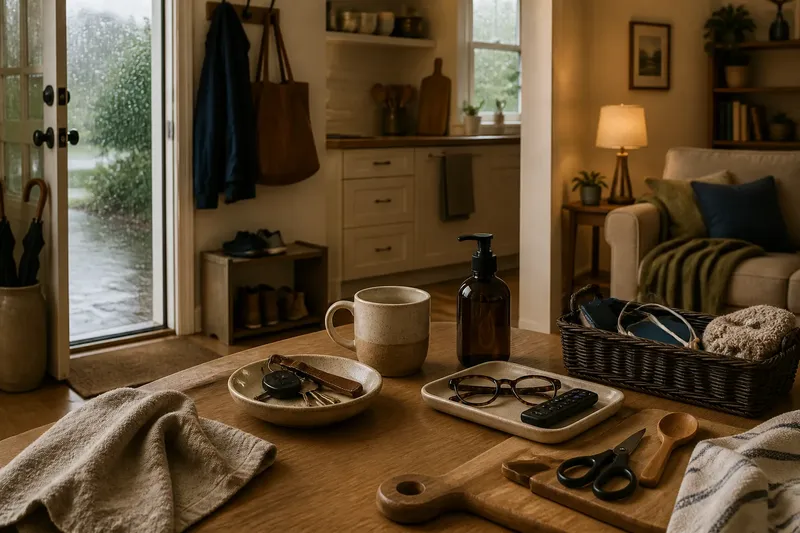
A rainy-day reset for everyday objects starts with the things that interrupt an ordinary task: keys stranded on a table, scissors buried in a drawer, or a dish towel with nowhere dry to hang. Rather than reorganizing a whole home, move room by room and decide whether each frequently used object needs a quick tidy, a dependable place, or no change at all.
This is a routine for noticing, not a demand to make every surface look spare. A useful home works a little like a well-used kitchen drawer: each item should be findable when needed, but it does not have to be arranged for display. Choose a comfortable stretch of time, bring a cloth and a small basket for items that belong elsewhere, and stop when the routine begins to create more work than it removes.
What counts as a reset?
A reset is a small adjustment to the way an object is kept, not a full decluttering project. Look for a specific friction point: an item is dirty, hard to return, often misplaced, or already working well. The point is to improve the next ordinary use.
Give each object one of three decisions:
- Tidy: Remove a little dust, return loose parts, or put the object back where it already belongs.
- Give it a place: Choose a location that fits how and where it is used, then make returning it straightforward.
- Leave it alone: Keep the current arrangement when it works, even if it is not especially decorative.
These choices keep a reset from turning into a hunt for things to fix. A familiar arrangement can be the right one; change is useful only when it answers a real inconvenience.
Which room should I start in?
Start where a small delay is easiest to notice, often the entryway or kitchen. If a different room has been catching your attention, begin there instead. The route matters less than staying with one area long enough to make a few clear decisions.
Carry a small basket for belongings that have wandered into the wrong room, but do not use it as a new storage system. Return its contents at the end. Keep the surface you are working on available, and avoid emptying drawers or cabinets just to see what is inside; that expands the task without necessarily helping the objects you use most.
What should I check in the entryway?
Check the items that travel in and out with you: keys, bags, shoes, umbrellas, and any mail or reusable tote that tends to collect near the door. Notice whether each object has a place you can reach while arriving or leaving, rather than a place that merely looks orderly.
For keys, a shallow dish or a hook can work if it sits on the path you naturally take. Bags may need a hook, shelf, or open patch of floor that does not obstruct a doorway. If wet umbrellas gather there, let them dry in a suitable spot instead of closing them damp and putting them away.
Mail is different from a tool you need daily: a small tray can keep it together, but it should not become a permanent hiding place. If papers need a decision, place them where you will handle them as part of an existing routine. The aim is to keep the entry usable, not to build an elaborate sorting station.
What deserves attention in the kitchen?
Focus on the objects used during ordinary meals and cleanup: a favorite mug, a wooden spoon, a cutting board, dish towels, and the opener or scissors you often reach for. Notice whether a frequently used item is buried behind occasional-use equipment or left on a counter because its storage place is inconvenient.
Move only what creates a clear snag. A spatula used at the stove may belong in an accessible drawer or container nearby; a seldom-used serving dish need not move simply because it occupies a less prominent shelf. Wipe a sticky handle or return a loose utensil to its holder, using a cleaning method appropriate for its material.
Pay attention to drying and care as well as storage. A damp towel needs somewhere it can dry; a board or wooden utensil should be kept according to its care needs. Product labels and manufacturer directions matter for cleaning materials, so follow them when an object’s care is not obvious.
How do I reset a living area?
In a living area, look at the objects that support repeated habits: reading glasses, a book in progress, a remote, a throw, or a charging cable. Ask whether each item is close to the activity it serves and whether its place is easy to restore after use.
A small tray can gather a few loose items on a side table, while a basket may suit a blanket that is used there each evening. These are options, not rules. If a book left by a chair is the reason you remember to read, its visible position may be doing useful work.
Check shared surfaces without treating every object on them as clutter. A remote beside the chair may be exactly where it belongs. If a cable crosses a walkway or gets pulled off a table, a different route or a nearby storage place may make the routine easier; do not attempt electrical work or alter a cord beyond its intended use.
What about bathroom and work surfaces?
In the bathroom, consider the everyday set: toothbrushes, combs, hand towels, and the soap or skin-care items you use regularly. A tidy means cleaning a surface or returning an item to its usual spot, not clearing away everything that makes the morning routine work.
Keep items that need to dry where air can reach them, and avoid storing products in a location that conflicts with their labels. A small container can corral loose grooming tools, but it should be simple to clean and should not turn into a pile of products you no longer use.
At a desk or household work surface, separate tools used for current tasks from objects that only pass through. Pens, a notebook, and scissors may deserve nearby homes; a receipt awaiting attention may need a temporary place with a clear next action. If the desk is shared, preserve the other person’s useful arrangement rather than assigning new homes unilaterally.
How do I decide whether to change a place?
Change a storage place when the object repeatedly lands somewhere else, takes effort to retrieve, or cannot be returned without shifting other things. Keep the place when it suits the object’s use and people can put it back. A new container is not automatically an improvement; it may add a lid, a step, or another surface to manage.
Say you often leave a pair of scissors on the kitchen counter because the drawer is crowded with tools you rarely use. Imagine moving those occasional tools to a less convenient spot and leaving the scissors in an open, safe-to-reach drawer section. The expected observable result is that the scissors are easier to return after opening a package, without taking over the counter.
Use a short trial in ordinary life before making a permanent change. If the new spot causes another object to become awkward to reach, adjust it or restore the previous arrangement. A home’s storage is a working arrangement, not a test of discipline.
What if nothing needs changing?
Leave things as they are when they are clean enough for their purpose, easy to find, and returned without annoyance. An object does not need a special container or a carefully styled display to count as well kept. Keeping a useful arrangement is an active decision, not a missed opportunity.
Also leave alone objects whose use is seasonal or occasional unless they are causing a present problem. A raincoat near the door during wet weather may be convenient; a seldom-used serving bowl can remain stored until needed. The reset is about frequent contact, not making every belonging equally accessible.
How can I keep the routine small?
Set a natural stopping point: finish the room you chose, return the basket’s contents, and put away the cloth. Resist adding a closet, drawer, or donation pile to the task unless you have decided separately that it needs attention. A compact routine is easier to repeat because it does not borrow time from every other household job.
When the same object keeps drifting, treat that as useful information. Its current home may be too far away, too full, or out of step with how you use it. Make one modest adjustment and see whether the next return feels easier. A rainy-day reset for everyday objects works best when it respects what already serves you, while making the small points of friction easier to see.